Free shipping on orders over 249 SAR


TRAIL RUNNING
Concept, History, and Benefits
- What do we mean by trail running?
- What sports overlap with this sport?
- What about the term "mountain runner"?
- When did this sport begin?
- How did trail races evolve globally?
- What is the current status of the Arab world in this sport?
- What are the benefits of trail running?
An educational series by Dr. Tariq Al-Bahlan on trail running, sponsored by advsto.

What do we mean by trail running?
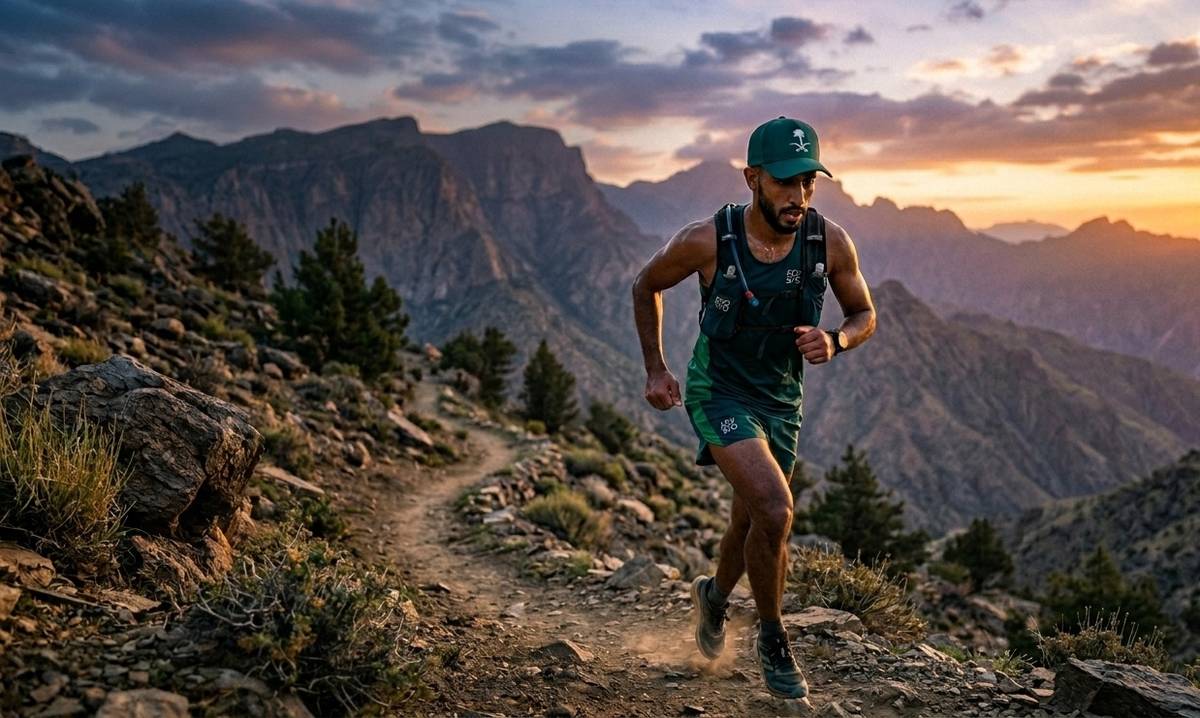
Trail running is a sport practiced away from paved roads. Participants forge their paths through diverse terrains including mountains, hills, forests, deserts, valleys, and open plains.
Unlike road running, which takes place on flat, prepared surfaces, trail running gains its identity from the presence of nature with all its complexities; the elevation shifts, the ground alters between rocks, mud, and tree roots, and every single step demands a different level of alertness.
The International Trail Running Association (ITRA) defines this sport as: "A foot race open to a natural environment with minimal paved or asphalt roads, which should not exceed 20% of the total course"[ITRA, 2023]. This precise definition sets a specific benchmark for this sport and its authentic connection to nature.
What sports overlap with this sport?
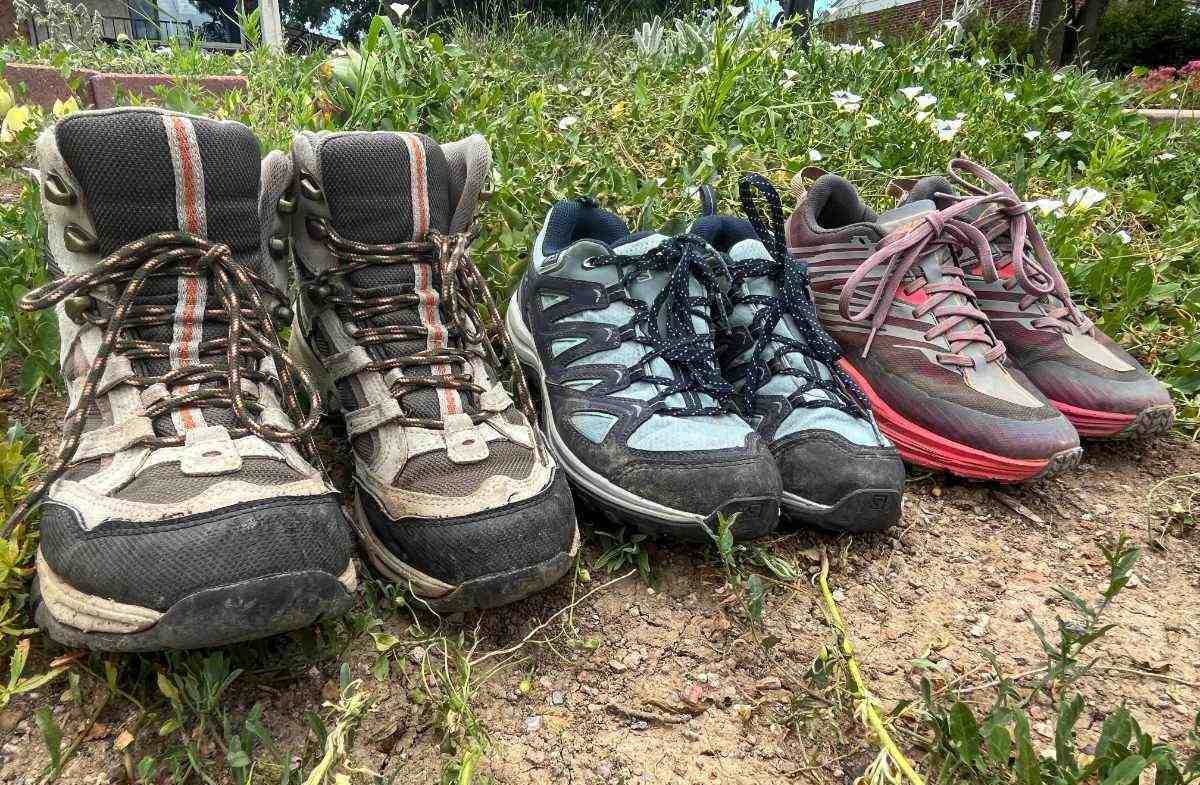
On the surface, trail running overlaps with other outdoor activities such as hiking and trekking, yet each possesses a distinct character:
- Hiking:Focuses on peaceful exploration during single-day trips.
- Trekking:Involves multi-day backpacking journeys.
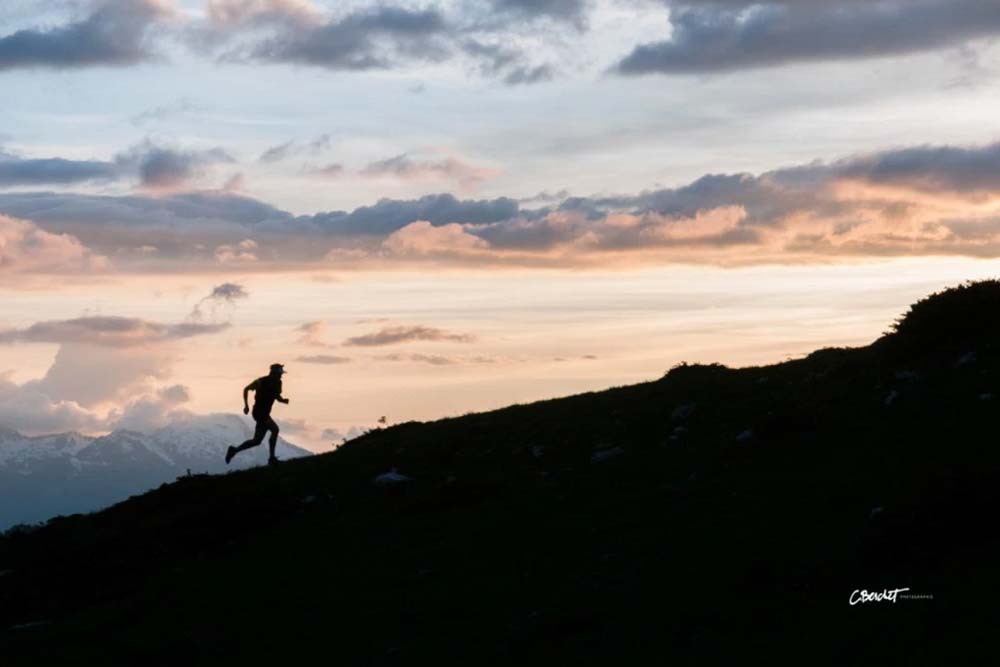
- Trail Running:Combines speed and endurance simultaneously. It can be a light daily training session or a grueling competition extending over tens of kilometers across rugged terrain.
What about the term "mountain runner"?
A term has become common among Arab runners, which is "Mountain Runner". In my view, this term narrows the scope of the sport and confines it to a single environment, whereas mountains are just one of the many terrains where it is practiced.
I have not found an equivalent phrase in other languages; they exclusively use the term "TRAIL RUNNER", which literally and accurately translates to "natural path/trail runner". This is much more appropriate as it reflects the diversity of environments where the sport takes place without limiting it to a specific topography.

When did this sport begin?
Originally, all running in ancient times took place in nature, as paved roads and tracks did not exist until recent history. Therefore, it is no surprise that its roots trace deep into human history, when running across natural terrains was a means of survival—whether for hunting or escaping danger.
This is evident in the lifestyles of indigenous peoples like the Tarahumara tribe in Mexico, who are world-renowned for their ability to run hundreds of kilometers across mountains for hunting and communication. This supernatural capability, beautifully described by Christopher McDougall in Born to Run, demonstrates that trail running was never just a sport, but an essential part of life itself.
As a competitive sport, trail running began taking shape in Europe and North America during the 19th century with the emergence of cross-country races as part of runners' training. However, the true transformation occurred in the 20th century, when ultra-marathons officially took to natural trails.
How did trail races evolve globally?
In 1921, the Comrades Marathon was established in South Africa. As one of the oldest ultra-marathons in the world (approximately 89 km) run on various roads and paths, it paved the way for trail running to develop into an independent sport.
With growing interest in nature and fitness in the late 20th century, trail running emerged as its own distinct category driven by a spirit of adventure. In 1977, the Western States 100-Mile Endurance Run was founded in California (161 km), marking the first organized ultra-trail race in America.
This was followed in 2003 by the Ultra-Trail du Mont-Blanc (UTMB) in Chamonix, France. Spanning 175 km around Mont Blanc across France, Italy, and Switzerland, it is considered today one of the most famous and difficult races in the world. It is managed by the UTMB Group, which has become a prestigious credentialing body. Race organizers worldwide compete to get its approval and apply its standards, alongside the International Trail Running Association (ITRA).
Today, tens of thousands of trail races span the globe, gaining massive attention. This growth intersects with state interests, as countries utilize them to promote environmental culture or attract tourists to their breathtaking trails, yielding powerful economic benefits.
What is the current status of the Arab world in this sport?
Trail running was not prominently present in the Arab world until recent decades, despite the region's rich topographical diversity—boasting mountains, deserts, valleys, and forests that create an ideal environment for this sport.
Historically, just like other civilizations, running or walking in nature was a part of daily Arab life, whether for navigating deserts or hunting in the mountains. However, it was not practiced as an organized sport until the recent rise in fitness awareness and the global spread of trail running culture.
In recent years, trail running has rapidly gained popularity in the Arab region, fueled by local initiatives and growing passion from communities:
- Wadi Rum Ultra (Jordan):Held in the Wadi Rum desert, it is one of the region's premier races, drawing local and international runners for distances ranging from 50 to 260 km across unique desert and rocky terrains.
- Marathon des Sables (Morocco):A global icon spanning 251 km across the Sahara Desert, which routinely sees strong participation from Arab runners alongside international competitors.
- Other notable races are emerging in Oman, Saudi Arabia, Egypt, the UAE, and beyond, with many joining the UTMB World Series, reflecting the region's integration into the global trail running scene.
What are the benefits of trail running?
Trail running is far more than just a physical workout; it is a holistic experience offering multiple physical, psychological, and social benefits that surpass conventional road running in several aspects. These benefits stem directly from interacting with nature and the varied challenges presented by natural terrains.
1. Physical Benefits
Trail running boosts cardiorespiratory fitness due to constant changes in elevation and pacing, which improves the body's $VO_2\text{ max}$ (oxygen consumption efficiency). A study published in 2017 in the Journal of Sports Science & Medicineshowed that running on uneven terrain increases energy expenditure by 10–15% compared to running on paved surfaces, meaning more calories burned and enhanced endurance. Furthermore, the varying ground—from rocks to mud—activates more muscle groups, particularly in the legs and core, to maintain balance. This dynamic engagement significantly reduces the risk of repetitive strain injuries caused by the monotonous motion of road running.
2. Psychological Benefits
Running in nature remarkably enhances mental health. Research published in Environmental Health and Preventive Medicine (2019) proved that exposure to natural environments reduces cortisol levels (the stress hormone) by up to 20% compared to urban settings. When an individual runs among trees or up a mountain slope, they experience tranquility and a total disconnection from daily stressors, boosting focus while alleviating symptoms of anxiety and depression. This deep connection to the earth, described by Christopher McDougall in Born to Run as a "dance with the earth," provides a profound sense of freedom and accomplishment.
3. Social Benefits
Trail running fosters tightly-knit athletic communities. Group training and races bring together individuals from diverse backgrounds, promoting communication and mutual support. Unlike road running, where a runner can often feel isolated, natural terrain frequently demands cooperation—whether sharing trail information or helping someone navigate an obstacle. This communal aspect shines through clearly in the regional and international races we have experienced firsthand during our participations.