
The first cool morning after a long summer makes the trails feel inviting again. You pull out your hiking shoes and choose a demanding route because you used to walk it comfortably. A blister or an exhausting return can quickly put the next trip on hold.
A good start to Saudi hiking season is straightforward: choose a short route that suits your current fitness, wear comfortable footwear, pack the essentials and build up gradually.
What this guide covers
- Choosing the season, time and first route.
- Returning to regular walking.
- Shoes, socks and daypack essentials.
- Common mistakes and questions before you go.
When is hiking season in Saudi Arabia?
The cooler months from autumn to spring are often more comfortable in many parts of the Kingdom. Conditions vary between Riyadh, the coasts and the highlands, so the month alone cannot tell you whether a hike is suitable. Check the local forecast, wind, rain alerts and access conditions before leaving.
Choose a cooler part of the day and plan around daylight and your return time. A pleasant city forecast does not guarantee the same conditions on an exposed trail or summit.
Why the first hike can feel harder
Start with your fitness today
If you walked less over summer, return gradually to longer walks, climbs and descents. Choose a comfortable pace and rest before fatigue becomes exhaustion.
Check your footwear
Inspect the sole, its attachment, stitching and laces. Try your shoes on short local walks, especially after storage or when they are new. A remote trail is a poor place to discover that a shoe rubs.
How to choose your first trail
Look for a short, clearly marked route with modest elevation change and a known way back. Check the full return distance, terrain, ascent and expected time with the organiser. A beautiful photograph can hide steep descents or exposed sections.
- Around Riyadh: consider an introductory organised walk on a suitable approved route, and confirm the exact itinerary and access.
- Cliff destinations such as Edge of the World: do not assume every route is easy. Stay well back from edges and assess the specific section and conditions.
- Craters and highlands: walking around a viewpoint differs from descending into a crater or climbing a summit. Choose the actual route rather than the destination name.
Set a turnaround time. Head back if weather changes or progress is slower than planned.
Build a regular walking routine
Begin with short walks on level ground. Extend some outings and add gentle climbs once the current walks feel comfortable. Keep your first weekend trail below your maximum effort and leave plenty of time for breaks and the return.
The Saudi Ministry of Health recommends at least 150 minutes of moderate physical activity weekly for adults, such as brisk walking. Build towards that gradually; you do not need to add a demanding hike beyond your capacity to meet a target.
Feet first: shoes and socks
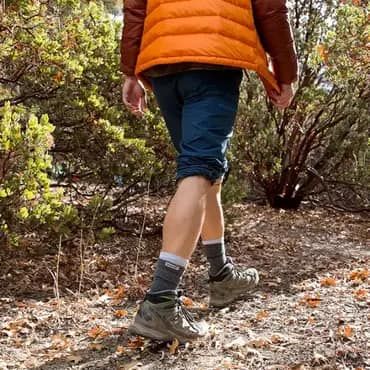
Choose footwear suited to the terrain, with secure footing and comfortable toe room. Test it with the socks you will actually wear. On descents, your toes should not repeatedly hit the front and your heel should not keep sliding.
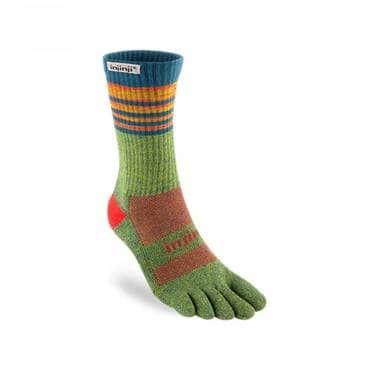
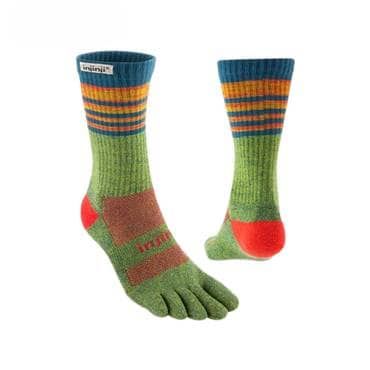
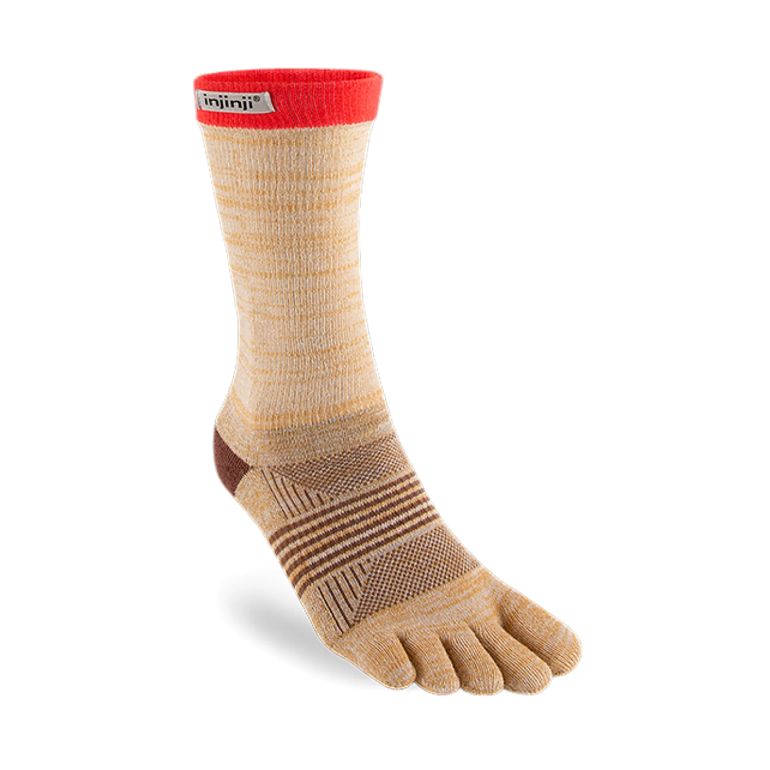
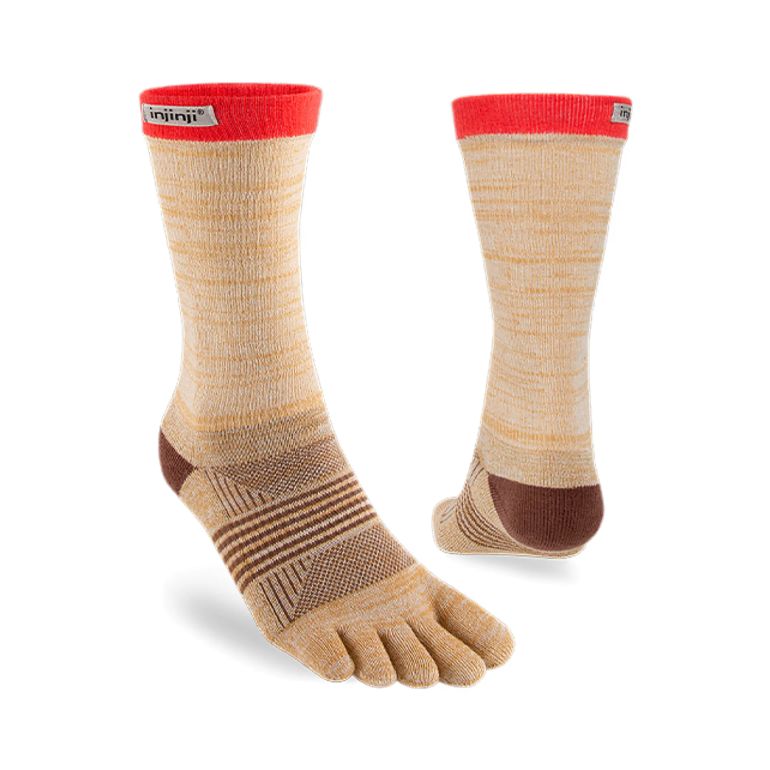
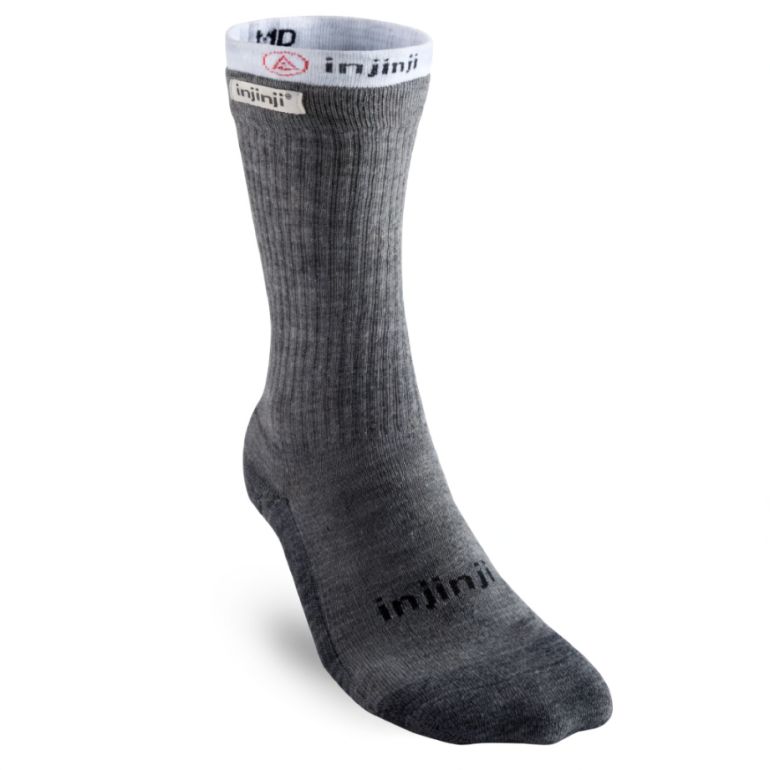
- Socks: choose the right size and moisture-managing materials such as merino blends or COOLMAX. Toe socks separate the toes and may help reduce rubbing between them, but cannot compensate for poor shoe fit.
- Moisture: carry a spare pair if wet conditions are likely, and smooth out wrinkles.
- Hot spots: stop early when rubbing begins, adjust your shoe or sock and protect the area before continuing.
Explore hiking socks to match your footwear and trip.
Pack for your first day hike

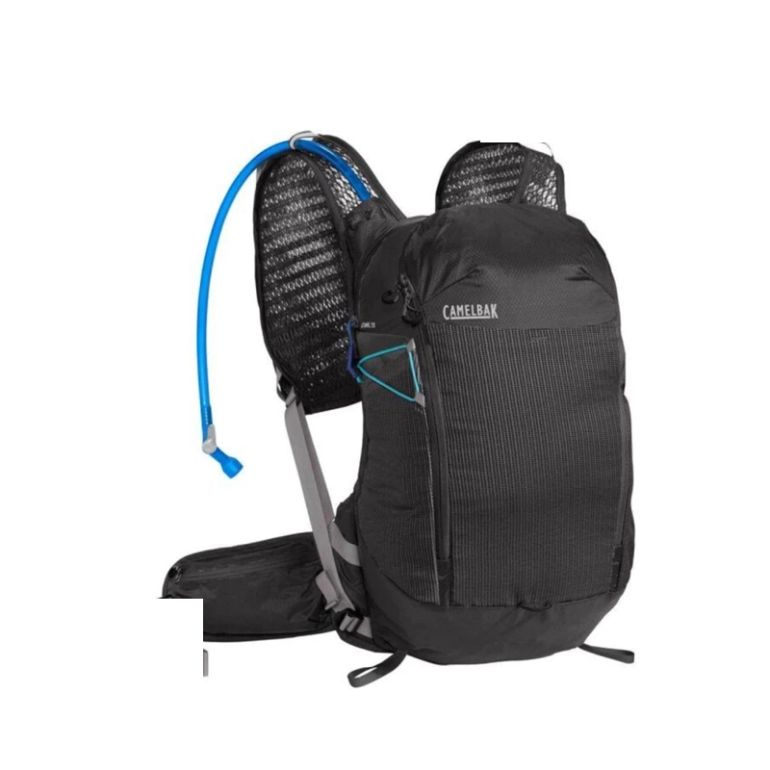
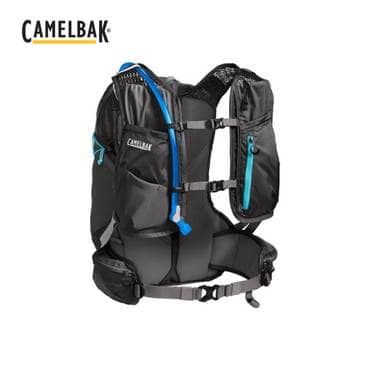
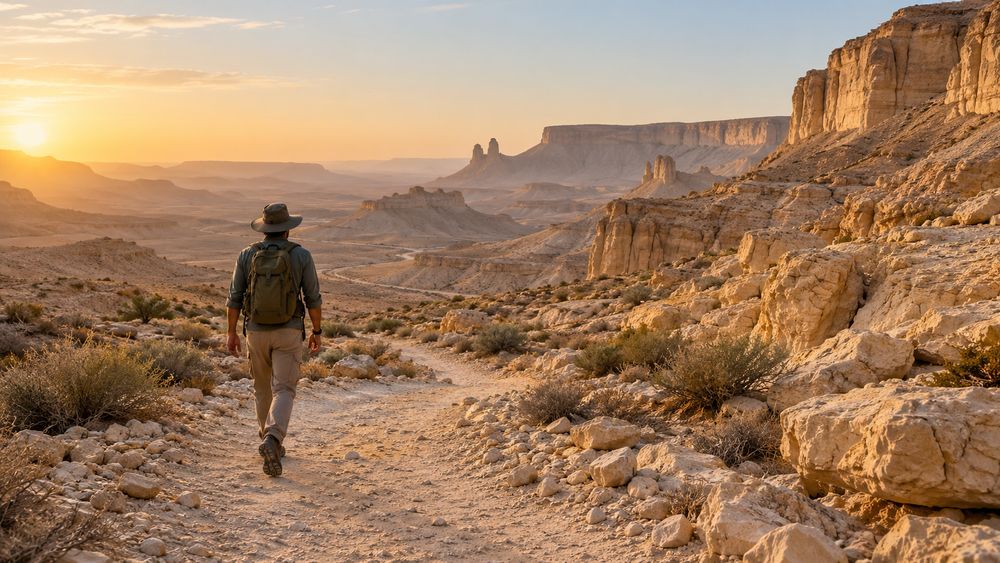
A comfortable daypack works for many short trips if it carries the essentials. Images in this guide are AI-generated illustrations and do not depict specific products.
- Water and food: plan around temperature, duration, exertion and verified refill points, with a reserve for delays. Carry a snack and do not assume water is available on the trail. Drink appropriately for your needs; electrolytes are not necessary on every short walk.
- Sun protection: a hat, sunglasses and suitable sunscreen.
- Light: a charged headlamp with appropriate backup power.
- Navigation and communication: an offline map, charged phone and power bank; do not rely on signal alone.
- An extra layer: clothing suited to morning temperatures, wind and changing weather.
- Basic first aid: personal supplies, blister protection and an emergency whistle.
Five mistakes to avoid
- Choosing by photographs alone: compare distance, elevation, terrain and return time.
- Leaving without sharing a plan: tell a trusted person where you are going and when you expect to return. Start with companions or an organiser familiar with the route.
- Ignoring sun and fatigue: slow down, rest and turn back when conditions no longer suit the plan.
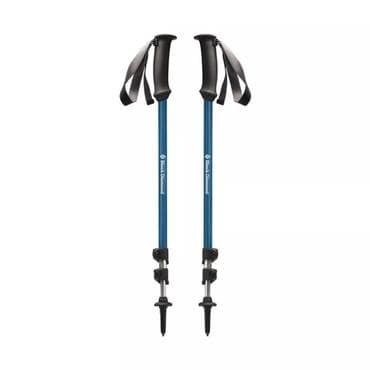
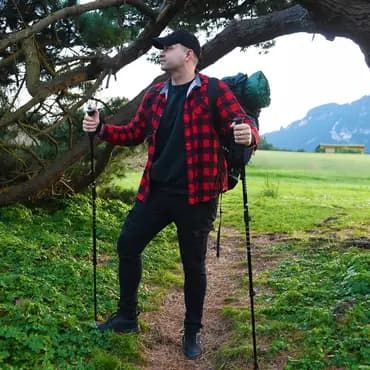
- Rushing downhill: use shorter, controlled steps. Trekking poles may help balance when used correctly.
- Entering wadis during rain alerts: avoid flood channels and low ground; rain elsewhere can affect your location.
Before-you-go checklist
- Check weather alerts and route access.
- Confirm distance, difficulty and turnaround time.
- Test shoes and socks; pack water and food.
- Save the map and charge phone and headlamp.
- Share your plan and carry all litter out.
Frequently asked questions
How long should my first hike be?
There is no universal distance. Choose something below your usual comfortable capacity, and account for climbs, heat and the journey back. Time and effort matter as much as kilometres.
Do I need hiking shoes for every walk?
It depends on the surface. A level path differs from rocky or slippery ground. Fit, grip and comfort are the priorities.
Are trekking poles essential?
Not on every route. They may help with balance on uneven ground. Learn to adjust and use them before a more difficult outing.
When should I choose a harder route?
When your current outings feel comfortable and you recover well. Increase one factor at a time, such as duration or ascent.
Get ready for your first steps
Choose a route that suits you today and keep walking between trips. Browse hiking equipment at Advsto for what your route actually needs. Comfort and preparation matter more than carrying extra equipment.
Weekly activity reference: Saudi Ministry of Health. Trail access and conditions vary; check with the organiser and official alerts before your trip.