
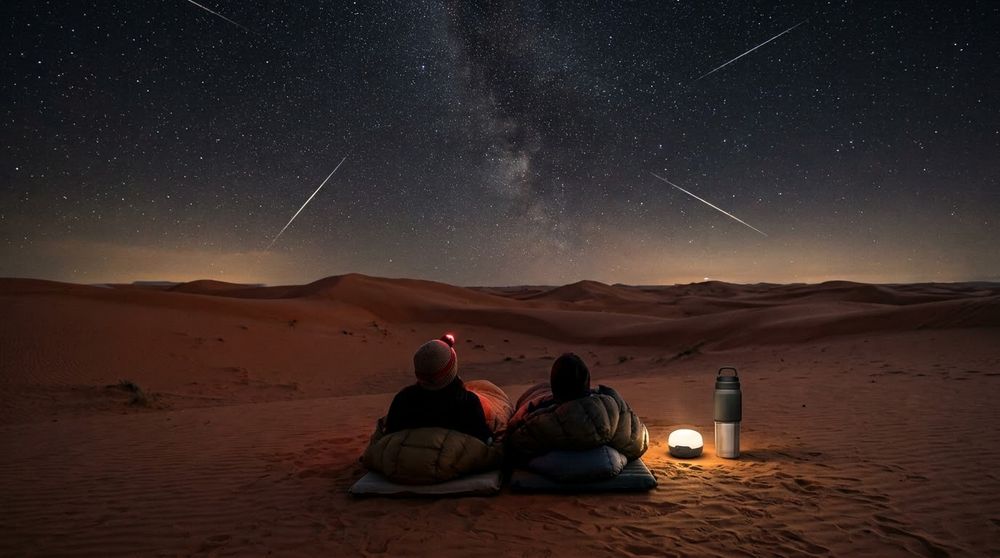
You hear there's a meteor shower tonight. You drive 40 minutes out of the city, lie back and look up. An hour later you've seen two meteors, you're cold, and your phone is still in your hand. You head home thinking meteor showers are overrated. Most of the time, the sky wasn't the problem. Three small details were.
Why You Saw Nothing: 3 Reasons That Aren't the Sky
City Glow Reaches Further Than You Think
The glow of a large city covers part of the sky even when you're well outside it. If you can see an orange dome of light on the horizon, you're still too close. Faint meteors, which are most of them, disappear into that glow.
Your Phone Resets Your Night Vision Instantly
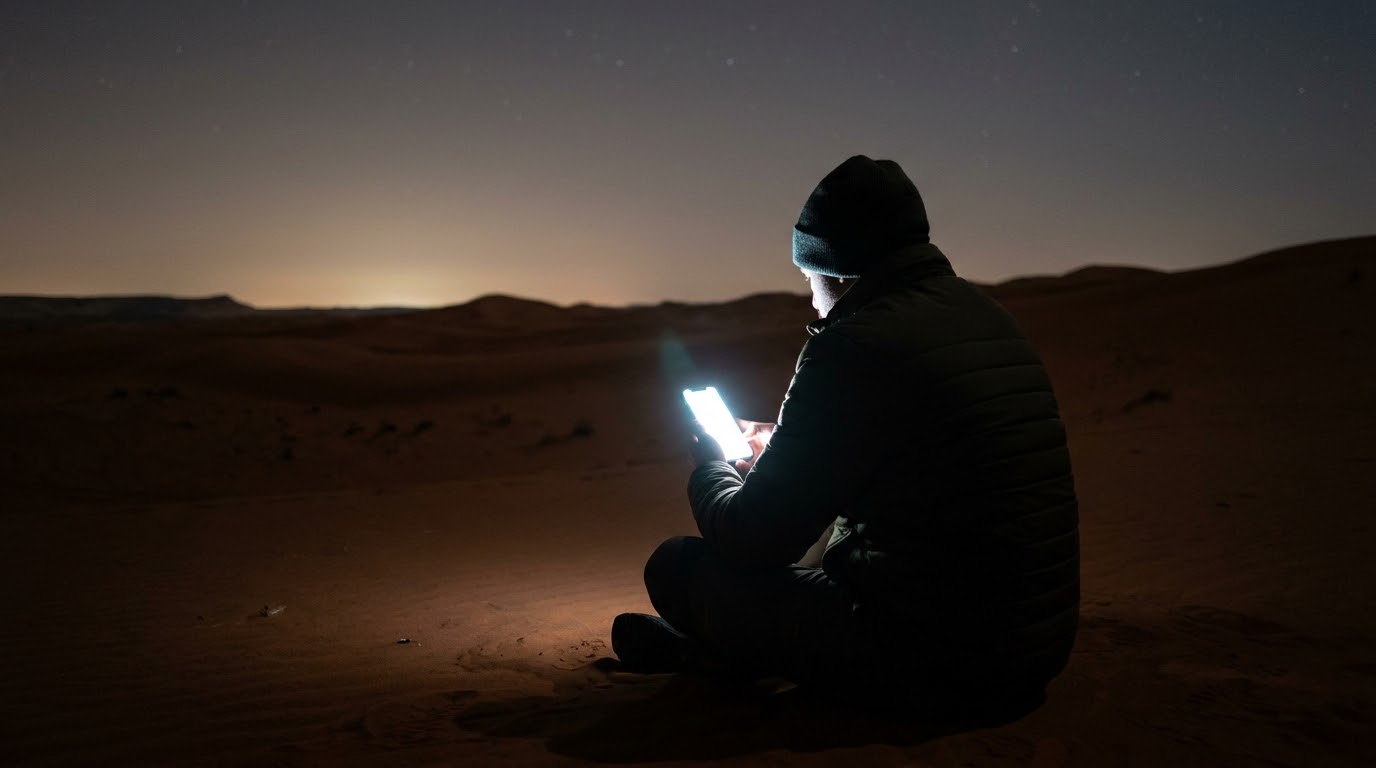
Your eyes need about 20 minutes in the dark to adapt and pick up faint meteors. This is advice from the Saudi Space Agency and the Jeddah Astronomical Society. One look at a phone screen or a white flashlight sends you back to the start. Many people spend the whole night switching between screen and sky, so their eyes never adapt.
You Left Before the Best Hours
Most meteor showers peak in the hours before dawn. If you go out after sunset and head home at 11 p.m., you miss the best part.
Geminids 2026: When to Look
According to the Saudi Space Agency's astronomical guide, the Geminids peak on 13 December 2026, with up to 100 meteors per hour under ideal conditions. You'll only see that full number from a very dark site, but even a moderately dark spot gives you plenty worth the trip. The Geminids come from the asteroid Phaethon, and their meteors tend to be bright.
Conditions this year are good. The full moon falls on 24 December, so on peak night the moon is a thin crescent that sets a few hours after sunset, leaving the sky dark after midnight. Start watching after midnight and stay until just before dawn. No telescope needed; your eyes are enough.
Where to Go: Saudi Dark Sky Sites
Imam Turki bin Abdullah Royal Reserve
The reserve's Dark Sky site in the Great Nafud desert is certified by DarkSky International and is among the least light-polluted places in the Kingdom. The reserve publishes a monthly calendar of sky events, so check its official channels before you plan.
AlUla's Dark Sky Parks
AlUla has 4 certified Dark Sky Parks: AlUla Manara, AlGharameel Nature Reserve, Sharaan National Park and Wadi Nakhlah Nature Reserve, covering 6,146 km² in total.
Near Your City: Choosing a Dark Spot
If you can't travel far, pick a spot away from highways and lit villages, with an open horizon to the northeast, where the Geminids appear to come from. Check a light pollution map on your phone before the trip (not during it), and visit the spot once in daylight so you know the road and the ground.
The Cold That Ends the Night Early
A stargazing night is not a normal camping night. You sit or lie still for hours, and desert temperatures drop noticeably after midnight. People who plan around a campfire and moving around are surprised to be shivering at 2 a.m., which is exactly peak time.
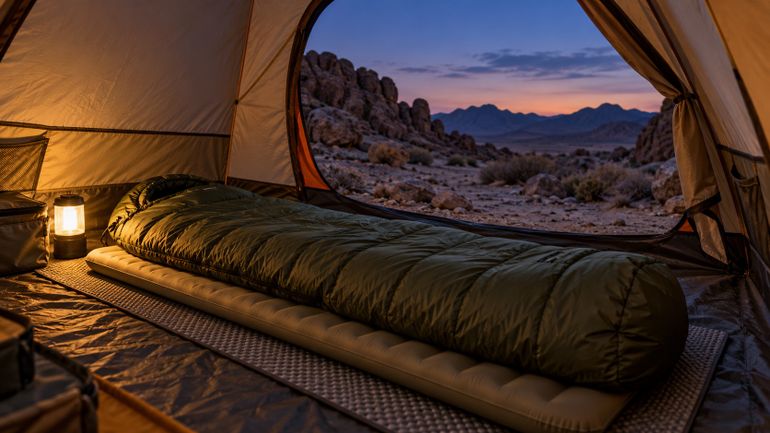
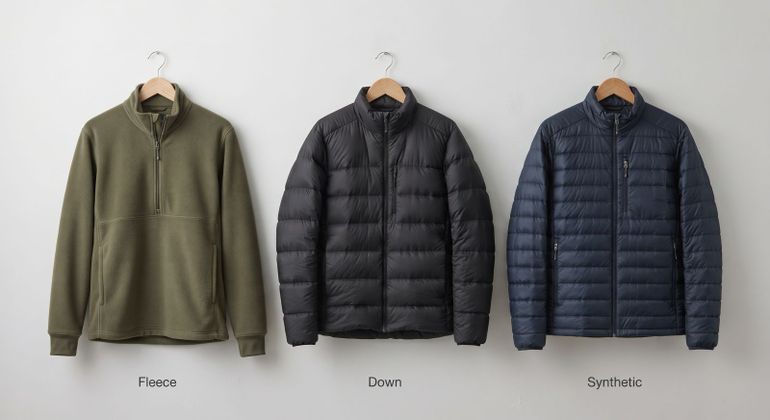
The rule from our article The Cold Is Coming from the Ground, Not the Sky matters even more here: insulation under you matters more than blankets on top, because the ground pulls heat from your body the whole time you lie on it. An insulated pad underneath and a sleeping bag you can lie in while watching beat three blankets on bare sand. Dress in layers (see our layering system guide) and wear a hat, because you won't be moving.
A hot drink makes a real difference in those hours, and it won't ruin the darkness the way a fire does. The CamelBak MultiBev comes with a built-in cup you can pour into while lying down, and keeps drinks hot for up to 14 hours according to its specs, so tea made at sunset is still hot at dawn.
Red Light: The Stargazer's Trick
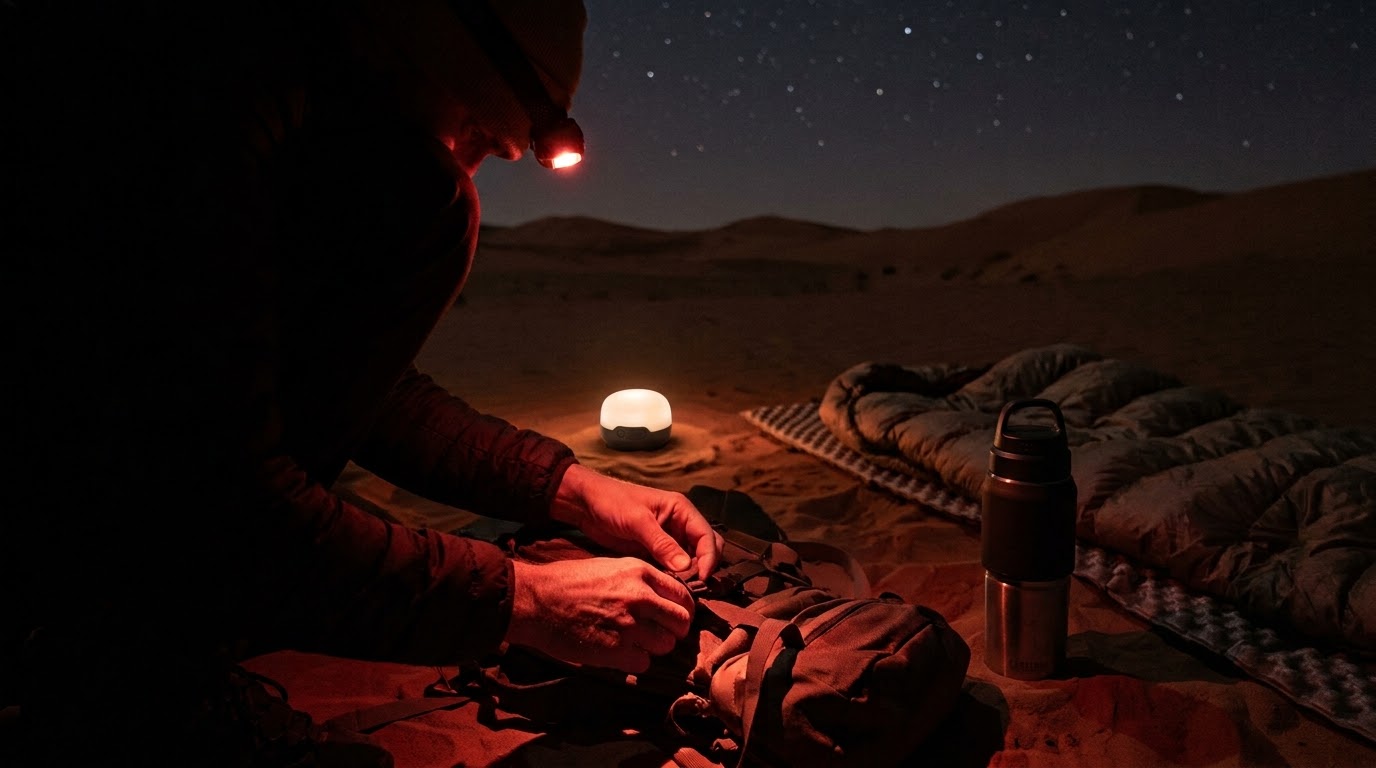
You still need light to walk and set up, but white light wipes out your night vision and everyone else's. Amateur astronomers use dim red light because it has less effect on dark adaptation. A headlamp with a red mode, such as the Black Diamond Storm 400, lets you move hands-free without spoiling the session. For the camp itself, a small low-output lantern like the Moji 100 can sit away from the viewing area and be switched off while you watch.
Agree with your group from the start: no phones and no white lights at the viewing spot.
Your Stargazing Night Checklist
- A dark spot with an open northeast horizon, visited in daylight.
- An insulated sleeping pad.
- A warm sleeping bag, such as the Naturehike CW400 down sleeping bag.
- Layered clothing and a hat.
- A headlamp with a red light mode.
- A dim lantern for camp.
- A hot drink in a CamelBak MultiBev.
- 20 minutes of patience before you judge the sky.
13 December is close. Set up your night now, and keep your eyes on the sky.