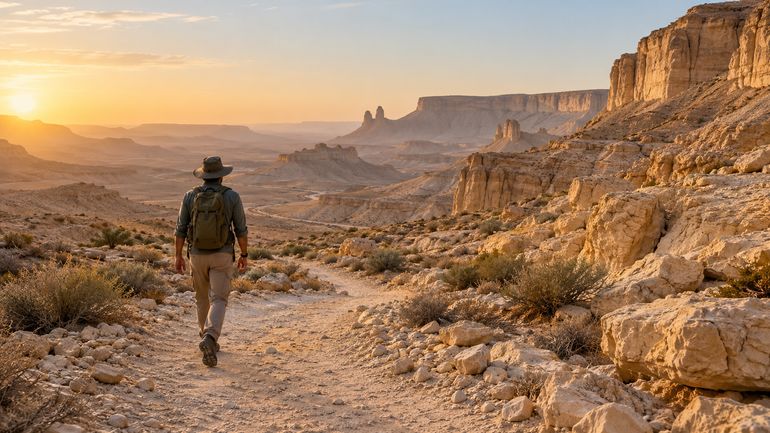

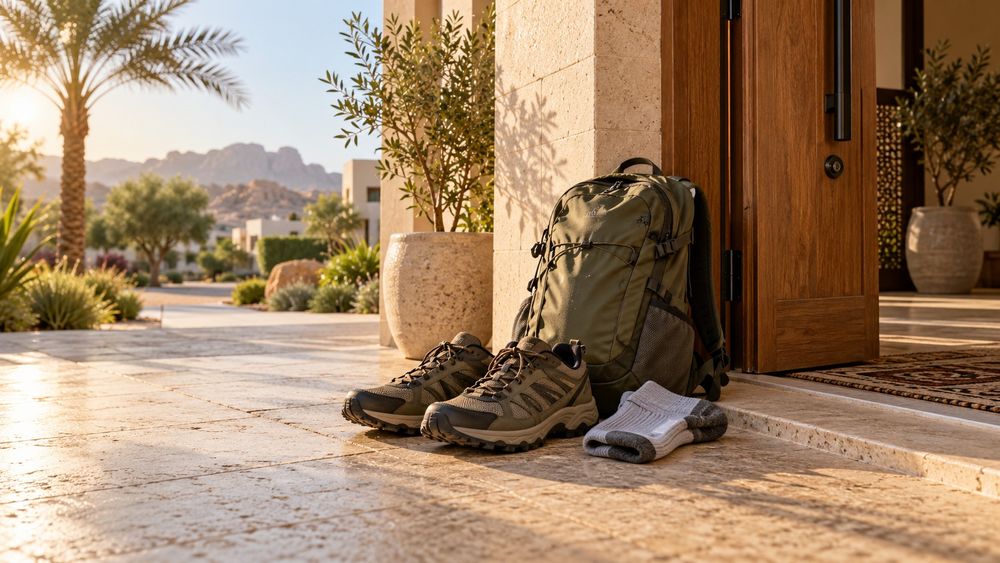
The first cool morning arrives. You choose a trail you handled last season, then return with a burning heel and tired knees. “Next week,” you tell yourself. Another week passes and your shoes stay by the door. Enthusiasm may not be the problem. Your first outing may simply demand more than the routine behind it can support.
Why the first walk can derail the season
Cooler weather does not instantly restore endurance after an inactive summer. A shoe that felt comfortable indoors can rub on a descent, while your expectations still reflect last season’s strongest day. Build a repeatable week before asking one ambitious outing to make up for months of sitting.
Give walking a place in your week
Saudi Arabia’s Ministry of Health recommends at least 150 minutes of moderate physical activity per week for adults. Brisk walking can contribute to that total. Walking for 30 minutes on 5 days is one practical way to reach it, rather than a first-day requirement. [1]
A flexible starting routine
As a practical starting suggestion, schedule 3 nearby walks of 10 to 15 minutes during the week. Attach them to an existing routine, such as leaving work. If those outings feel comfortable, gradually extend them over subsequent weeks toward the recommended total. Avoid increasing distance, climbing and speed together. A cancelled Friday hike should not cancel your weekday walks.
After each outing, record the time, how your feet felt and whether you feel ready to repeat it. That is more useful initially than chasing an arbitrary step count. Persistent or sharp pain calls for assessment, rather than a tougher walk.
Choose somewhere easy to return to
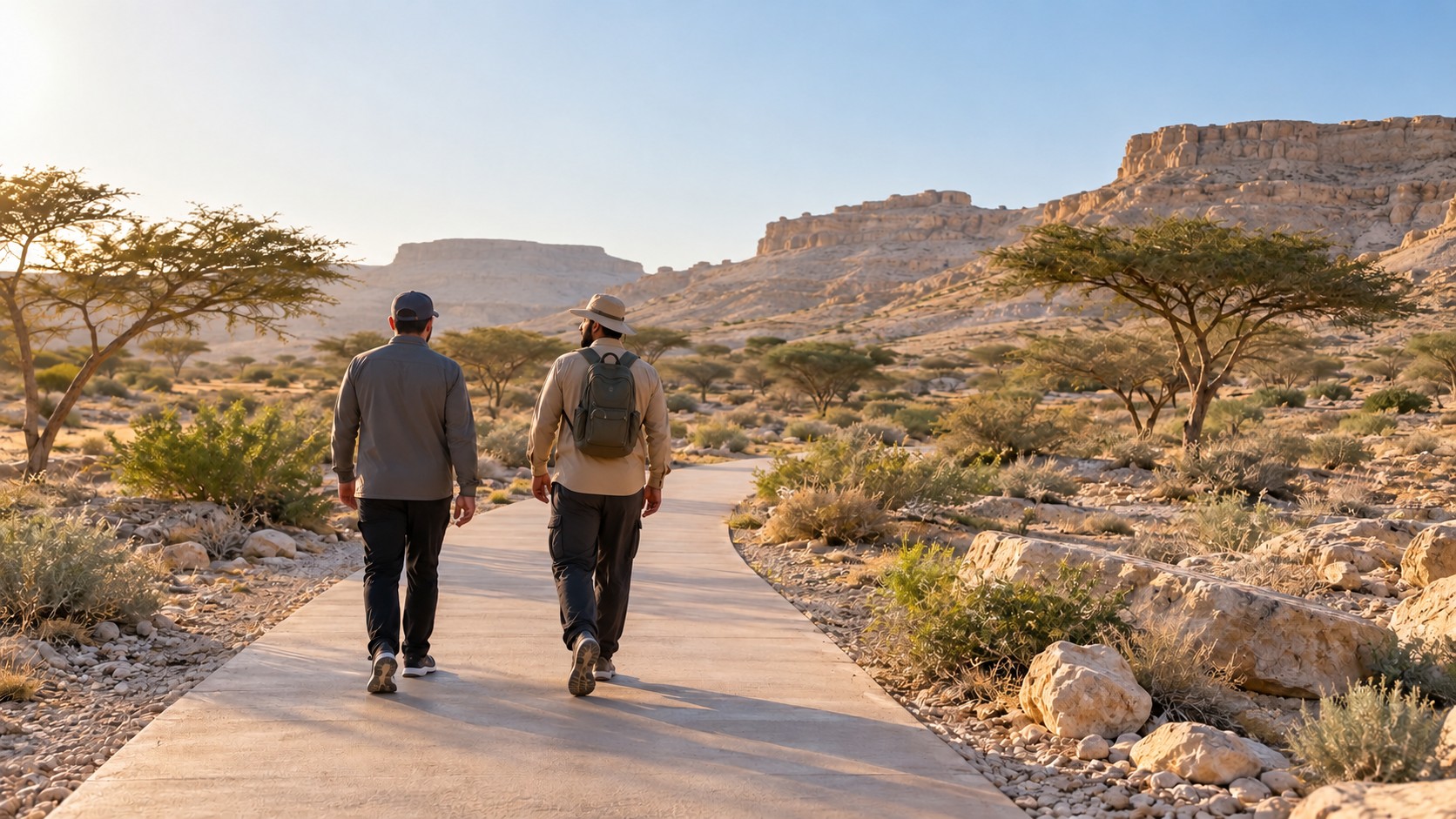
Except for the Tanomah option, the distances below are suggested total outings, not official site lengths. Easy ratings describe the selected level section and are editorial guidance. Confirm access, weather and ground conditions before leaving. [2–5]
• Riyadh, maintained paths near Wadi Hanifah Park: try a 2 km total out-and-back on a clear, gently graded section. Relatively easy if you choose level ground; avoid flood channels during warnings. [2]
• Eastern Province, Al Nakheel Corniche Park in Jubail: try 2 km total on level walking paths. A relatively easy return to walking, but coastal humidity and heat still matter. [3]
• Al Baha, Raghadan Forest Park: try 1 to 2 km total on short, easy recreational paths. Select the gentlest section rather than extending onto an unfamiliar mountain trail. [4]
• Aseer, Tanomah, Thowrayn Na’ama on the Mount Mana’ah experience: the operator lists 2 km and an easy rating of 3/10. Confirm the start point, how distance is measured and booking arrangements with the operator. [5]
Where Darb trails fit
The Trails and Trips Association, Darb, documents an 8 km historical trail in Jalajil, passing through the old town and mountainous terrain to its east. Treat it as a later goal after rebuilding endurance. Ask about ascent and the return route; distance alone does not establish difficulty. Other trails developed by the association include Darb Al Manjour in Dhurma and Musayqirah in Al Quwayiyah. Request current route details rather than assuming every Darb trail suits beginners. [6, 7]
Protect your feet and your next outing
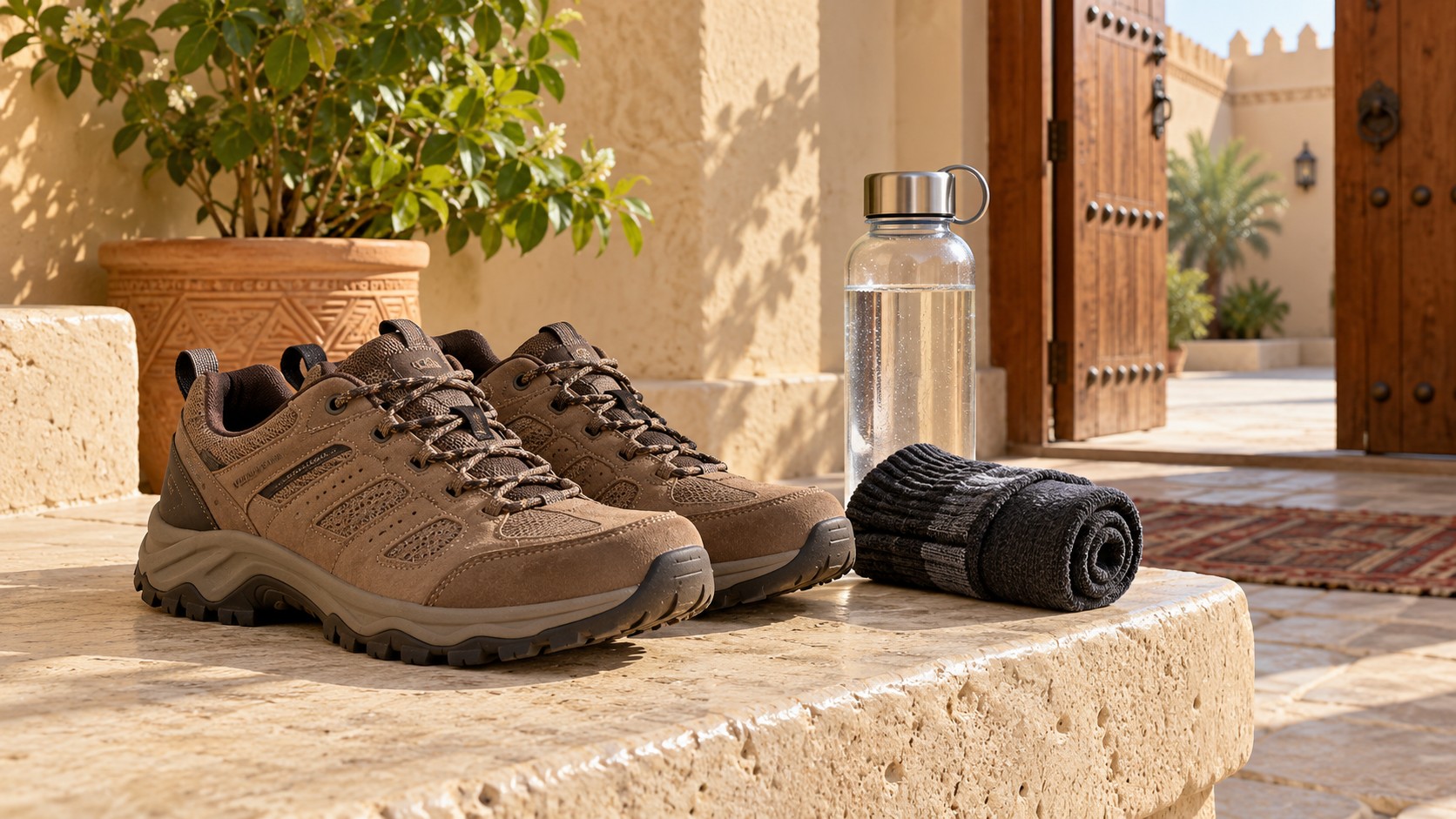
Test footwear on a nearby walk with the socks you will actually wear. Look for a secure heel, comfortable toe room and an outsole suited to the surface. For trail use, consider the fit of The North Face VECTIV Fastpack Mid FUTURELIGHT boots. Specifications cannot compensate for the wrong size.
The American Academy of Dermatology recommends moisture-wicking socks, properly fitting footwear and stopping when pain or redness begins. Avoid cotton that holds sweat, and replace damp socks. Injinji Trail Midweight Crew COOLMAX socks are one option to try, without assuming any sock guarantees blister-free walking. [8]
Keep a small pack ready
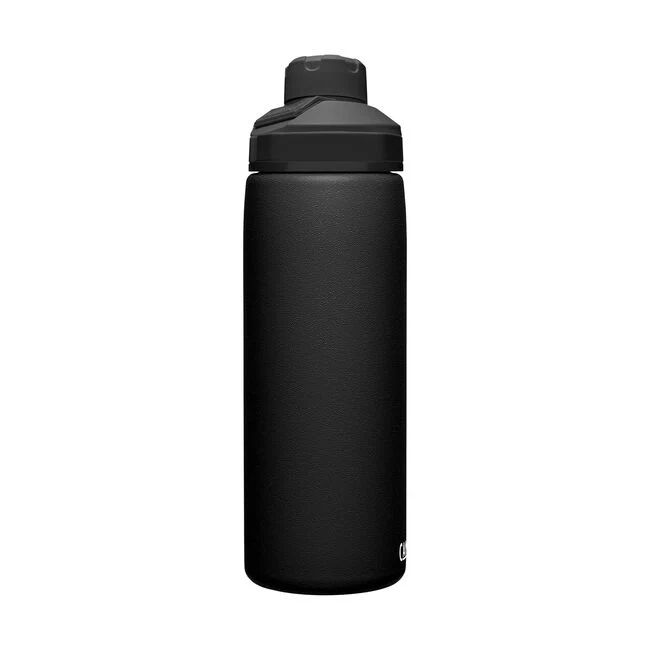
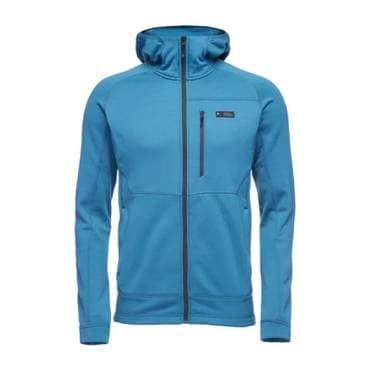
Pack water appropriate to conditions, effort and refill opportunities, a snack, a charged phone, an offline map, basic first aid, blister dressings, sunscreen and a suitable extra layer. Add a Columbia Bucket Hiking Hat for exposed sections and a Black Diamond Storm 400 headlamp with Moji 100 Olive pack in case your return is delayed. Phone light alone is a weak backup. [9]
For a light outing, consider the CamelBak Women’s Aurora 2.5L hydration pack if it holds your essentials; for a longer day, the CamelBak Octane 25 hydration pack. Avoid filling spare capacity unnecessarily. Reservoir capacity is not a universal water recommendation. Black Diamond Women’s Trail Pro Shock trekking poles may help on uneven terrain once you learn to adjust and use them.
Choose a cooler morning or a late-afternoon start with enough daylight to return. Exposed Riyadh trails can remain hot, coastal humidity can make effort feel harder, and mountain weather can change quickly. Check official alerts and share your plan with someone you trust. [9]
5 mistakes worth avoiding
- Waiting for a completely free weekend: book a nearby walk that needs little preparation.
- Choosing a trail for its photograph: check the surface, ascent and return distance.
- Testing new shoes far from home: start locally.
- Ignoring a hot spot: stop and adjust footwear or socks early.
- Replacing an inactive week with one long hike: return to a short outing you can repeat.
Set a time and choose your trail
Walking season has begun. Give it a place in your calendar, lay out your shoes and socks tonight, and choose a route that suits your ability today. The linked options at Advsto can help fill gaps in your kit. Finish the first outing comfortable enough to want the next one.
Sources
- Saudi Ministry of Health | Physical activity
- Visit Saudi | Riyadh pocket guide
- Visit Saudi | Al Nakheel Beach and Corniche Park
- Visit Saudi | Al Baha hiking spots
- Visit Saudi Experiences | Mount Mana’ah hike
- Darb | Jalajil historical trail
- Saudipedia | Trails and Trips Association
- American Academy of Dermatology | Prevent and treat blisters
- US National Park Service | Ten essentials