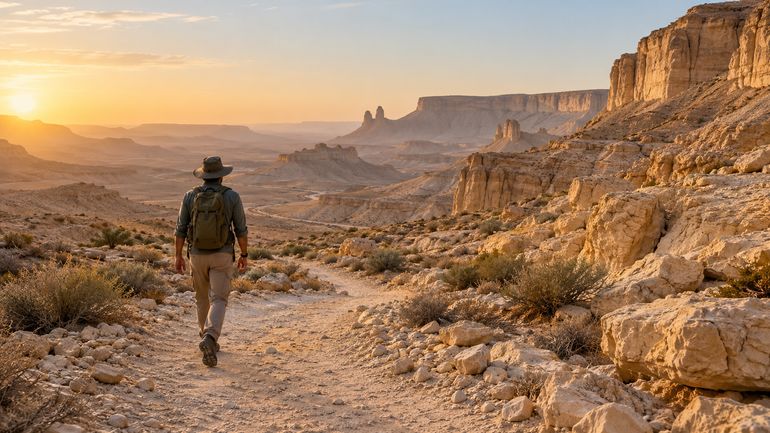

Hiking and trekking in nature are far more than mere physical exercises for fitness; they represent an immersive journey rich in historical, cultural, and social dimensions. It is a challenge inspired by nature, the occasional peril of the trail, and the sheer thrill of ascending. The emotions experienced during this pursuit are profoundly unique, shaped by the environment and its conditions—a subject truly worthy of reflection.
Trekking is not a fleeting activity that ends when the trail does; rather, it is an interactive school that refines one's character, fostering depth, contemplation, and wisdom. This wisdom, forged under the blazing sun and amidst mountain passes, does not remain confined to nature. It travels with the hiker as an authentic life skill, directly reflecting on their professional life. Strategic decision-making, crisis management, and the ability to maintain resilience and calm in the face of institutional hurdles—all share the same core essence as the tactics used to navigate rugged terrains and select safe passages. A long trek redefines the concept of the "impossible" in our minds, making us more balanced and capable of leading ourselves and our surroundings with a grounded, mountain-like wisdom.
From "Lost" to "Healed": The Philosophy of 'Wild'
The psychological and spiritual uniqueness of long-distance hiking is vividly illustrated in the true story depicted in the movie Wild, based on the memoir by Cheryl Strayed. With no prior experience, Cheryl embarked alone on a three-month journey, hiking over 1,100 miles of the Pacific Crest Trail (PCT). This was no simple walk in the park; it was a fierce, agonizing confrontation with her exhausted self following her mother's death, the collapse of her marriage, and a downward spiral into addiction.
She began the trail carrying a massive backpack she dubbed "Monster." As the miles wore on, bringing physical pain, ruined boots, and harsh weather conditions, Cheryl underwent a massive internal reckoning. Walking under the glaring sun in the isolation of the wilderness, she realized that the literal weight of her backpack mirrored the emotional trauma she carried within. As she gradually shed items from her pack to adapt to the trail, she simultaneously shed the burdens of her past, regret, and anger. The grueling physical trek transformed into a safe space for confrontation, healing, and self-acceptance.
By the end of her grueling journey, she reached a shore of psychological and professional safety. She transitioned from a woman shattered by trauma into someone at peace with her past, ready to begin a new, conscious life. This transformation radically impacted her subsequent career, leading her to become one of the world's most renowned authors and inspirational counselors through her famous "Dear Sugar" column and bestselling books. She successfully channeled the profound wisdom she gleaned from the trail to guide and coach millions worldwide on facing challenges, achieving recovery, and mastering self-leadership.
Spiritual and Psychological Reckonings on Difficult Trails
During an adventurous hike, a person enters a state known as "healing isolation," triggering deep existential reflections that reshape one's consciousness. It involves the dismantling of social masks; long distances strip away daily obligations and superficial appearances, leaving the hiker to face their unembellished truth. The mind begins to let go of past traumas, regrets, and toxic thoughts, rearranging priorities. Focus shifts from anxiety over the distant future to profound gratitude for simple provisions, like a sip of cold water or a patch of shade. These journeys also cement a reconciliation with loss and vulnerability. Standing before the majesty of the mountains, the hiker realizes that human crises are minuscule compared to the vastness of the universe, granting an inner peace and acceptance of reality.
How Walking in Nature Rewires the Brain
Prolonged and repeated walking in nature is not just an emotional activity; it is a neurological stimulation process that alters brain chemistry and thought patterns through proven scientific phenomena. It halts "rumination"—the repetitive cycle of negative thoughts, regret, and self-flagellation—giving the brain a deep rest from overthinking. Furthermore, continuous movement in changing natural environments stimulates "neuroplasticity" by triggering the release of Brain-Derived Neurotrophic Factor (BDNF). This protein is responsible for the growth of new neurons and memory enhancement, making the brain more flexible and adept at solving complex problems.
Long hikes in nature are also highly effective at activating the brain's "Default Mode Network." When walking without distractions, memory enters a state of "positive mind-wandering," allowing the brain to effortlessly connect disparate ideas, leading to a flow of creative thoughts and innovative solutions to stubborn problems. Additionally, breathing in the chemistry of nature and the reduction of stress hormones like cortisol activate the parasympathetic nervous system, shifting the body from a "fight or flight" state into a "rest and repair" mode. Finally, there is the "sustained dopamine" effect: unlike the quick, fleeting, and addictive dopamine hits we get from screens, a long hike provides the brain with slow, sustained doses of serotonin, building a deep, long-lasting sense of satisfaction and psychological stability.
Reflections from the "Tasha" Trail in Medina
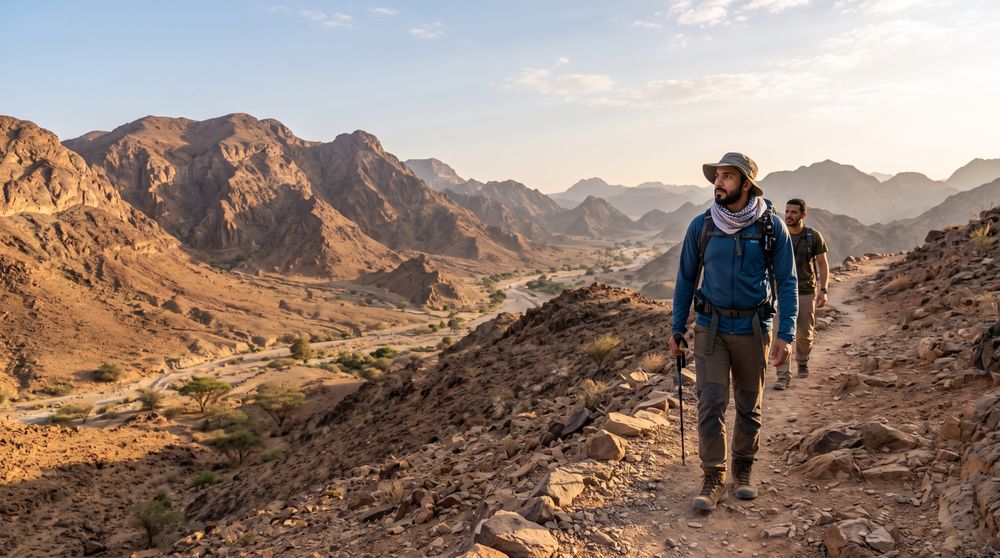
This contemplative and scientific spirit is not exclusive to world-famous trails; it emanates, in varying degrees, from every ascending journey. I experienced this firsthand while hiking with some young family members in the mountains of the "Tasha" region (west of Medina, near Yanbu Al Nakhl). I decided that the participants and I would "hunt" and share the thoughts that came to us on that rugged trail. The hike continued upwards through towering mountains, one peak after another, with no definitive end in sight. From the womb of that hardship emerged rich reflections connecting the adventure to life itself—reflections that rarely occur in ordinary circumstances like walking on tracks or in parks. Here are a few:
- The Current Step vs. External Judgments: Often, onlookers standing far away at the bottom of the mountain see the climber as taking unnecessary risks, feeling the urge to offer unsolicited advice. But the truth is, the climber is entirely focused on assessing their footing and securing their current and next steps, seeing exactly what they need to make the right decision. In life, those busy working and achieving should not pay attention to the judgments of outsiders who lack insight into the details and are content merely watching from the bottom.
- The Truth of Humility and the Grandeur of Achievement: Mountain climbers who reach advanced stages look back to see the base they left behind appearing deceptively close, as if they haven't covered much ground. True achievers in life view their accomplishments with immense humility, knowing with absolute certainty that even higher peaks await them, while those at the bottom look up at them in awe.
- Quiet Persistence vs. Temporary Enthusiasm: On difficult trails, some often start with blazing speed and overwhelming enthusiasm, only to lose their passion and slow down at the first obstacle. Meanwhile, those who walk with quiet persistence and a steady pace do not stop until they reach their destination. Life and long journeys require sustainability and commitment, not temporary bursts of impulse.
- Expanding the Options of the "Unknown": When mountains and trails multiply, the hiker feels as though they are treading on earth untouched by human feet. This reflection opens the door to creativity, a love for change, and the courage to pioneer new paths rather than repeating traditional ones. Similarly, life’s "unknown" options expand vastly when one dares to deviate from familiar, heavily trodden paths that usually lead to repetitive, uninspired results.
- Tracing the Water’s Path to Ease the Journey: Human energy is finite, and mountain hiking requires choosing the most efficient routes. The best path is often the natural course carved by water, for water is the true source of life. Likewise, a genuine investment in life must stay close to the origin, the soul, and the essence of life to ensure a safe arrival at the summit. A person disconnected from their soul wanders aimlessly and strays from the path that leads to the best endings.
- Life as a Vast Expanse: Trekking is usually a walk between two calculated points: a stable starting line and a safe destination, separated by a challenging expanse that demands careful investment of time and energy, a guide, and continuous trade-offs in decision-making. Slacking off or deviating can cost you the goal. This is exactly like our worldly life: a grand journey and expanse that requires guidance, continuous striving, and high resolve to reach the ultimate purpose.
The Tasha reflections are but a small window into an infinite world of thought. Every journey has its own unique context, and every adventurer has unique reflections based on their psychological state, cultural background, and personal challenges at that specific moment in their life. A mountain is a massive mirror reflecting whatever turmoil lies deep within the hiker. One might find a lesson in patience, another a manifestation of unburdening, and a third an opportunity to rediscover their hidden strength. Nature grants every person customized inspiration and a unique wisdom that resembles their soul alone.
In conclusion, hiking in nature is a unique sport where the physical movement of the body blends with the tranquility of meditation, yielding profound life and scientific lessons that are difficult to learn in any other practice.
Dr. Salih bin Saad Alansari
@SalihAlansari
Public Health Consultant & Health Promotion Expert
Supervisor of the Health Promotion Center, Riyadh
@SaudiHPC